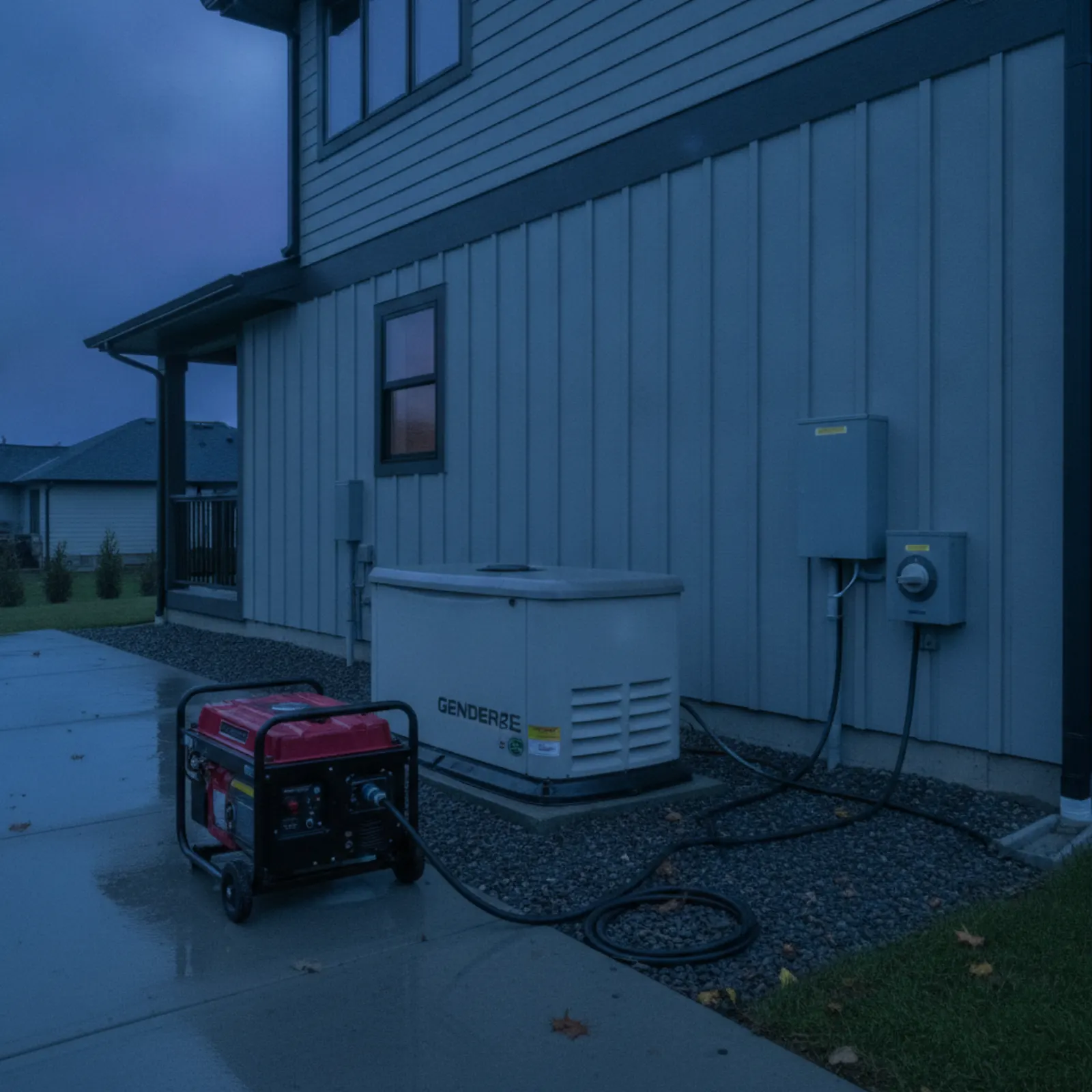
Generator Transfer Switch Cost: Interlock, Manual or Automatic?
How to budget for generator transfer equipment: interlock kits, manual and automatic transfer switches, electrician labor, permits, and safety.
Installation
Quick answer: The transfer equipment is not optional if you want to power house circuits safely. A portable generator often pairs with an interlock or manual transfer switch. A standby generator usually uses an automatic transfer switch.
Best for
Homeowners pricing safe home backup before buying a portable or standby generator.
Wrong fit
Buyers looking for DIY electrical instructions. This is licensed-electrician territory.
Tradeoff
An interlock can keep portable backup affordable, but it still requires correct installation and disciplined load management.
A generator does not safely power a house just because it has enough watts. It needs a safe way to connect to the electrical system.
That is the transfer-switch conversation.
Quick Answer
For portable generator home backup, compare a listed interlock kit and inlet against a manual transfer switch. For standby generators, expect an automatic transfer switch in the project. The installed transfer path belongs in the first quote, not as an accessory after the generator arrives.
Transfer options compared
Option
Common fit
Watch for
Interlock kit plus inlet
Budget portable backup
Requires load discipline and compatible panel
Manual transfer switch
Selected circuits with clearer control
Limited circuit count unless planned well
Automatic transfer switch
Standby generator
Higher cost, more installation scope
Extension cords only
Individual appliances outside the panel
Not whole-home backup and easy to misuse
The safety issue is backfeeding
Backfeeding can endanger utility workers, damage equipment, and create fire risk. The transfer device is what keeps generator power from feeding the utility side when it should not. This is not optional under the National Electrical Code: NEC Article 702 requires transfer equipment for optional standby systems connected to premises wiring.
Do not solve this with a suicide cord. Do not let a handyman improvise. Use a licensed electrician and permitted work where required.
Interlock vs manual transfer switch
An interlock can be the best value when you know your loads and can manage breakers during an outage. It often keeps the setup flexible because you choose which circuits to run.
A manual transfer switch can be cleaner for households that only want selected circuits and fewer decisions during an outage. It also forces prioritization upfront.
Neither is automatically better. The right one depends on your panel, generator size, outage pattern, and who will operate it. We compare the two in detail, including typical installed prices, in interlock kit vs transfer switch.
Automatic transfer switches are standby territory
A whole-house standby generator is sold as convenience. The automatic transfer switch is part of that convenience. When utility power drops, the system starts and transfers loads without you dragging equipment outside.
That convenience is why standby installed cost is so much higher than the machine price. The switch, pad, gas line, and electrician are all part of the real cost of a whole-house generator. If a quote lists only the generator, send it through our free quote review before you sign.
"Transfer switch included" is not a specification. Generac's residential catalog alone runs from a 16-circuit essential-circuit switch to a 400 A service-entrance switch, and the quote should name the make, model and amperage. The full list of what to require in writing is in what a standby generator quote must include.
Who is licensed to wire that switch also varies more than buyers expect. Some states license the electrical contracting business once, statewide, and bar cities from adding their own rules; others still let the individual electrician be required to hold a separate local card in certain cities. See how that plays out in North Carolina and Louisiana, versus the single-license, no-local-add-on rule in Georgia, before you assume any licensed electrician can pull your permit. New York goes further still: the state issues no electrician license at all, so licensing is entirely local, city by city and town by town.
Frequently Asked Questions
Do I need a transfer switch for a portable generator?
You need approved transfer equipment if you want to power home circuits through the panel. Otherwise, use properly rated extension cords to individual appliances, outdoors and away from the house.
Is an interlock safe?
A listed interlock installed correctly on a compatible panel can be a safe path. The unsafe path is improvised wiring or a generator cord that can backfeed.
Can I install it myself?
This is electrical work and should be handled by a licensed electrician where required.
Does transfer equipment change generator size?
It changes what you can safely power and how you manage loads. Sizing still starts with essential loads and starting watts.
These guides are built from manufacturer documentation, public specifications, primary research where health claims matter, and repeated buyer questions that show up in real ownership and installation decisions.
Manufacturer responses can clarify pricing bands, warranty terms, support footprint, or common mistakes. They do not move a page up the shortlist on their own.
Health and safety pages are written conservatively. When the safer answer is to slow down, get clearance, or skip the heat, that is the answer we give.