Author

Anna Persson

Writer and buyer guide editor

Editorial focus

Anna Persson writes Generator Guide's buyer-facing and educational pages. Her work focuses on helping people understand what backup power actually costs installed before they spend money.

How she works

Her pages are built from manufacturer documentation, public specifications, CPSC safety guidance, and repeated buyer pain points from real-world ownership stories and install quotes.

Why this matters

The goal is simple: make the next decision clearer, cut the marketing noise, and say when the wrong setup is still the wrong answer even if the brand is good.

Written by Anna Persson

Guides

What Size Generator Do I Need? Real Wattage Math
2026-07-04Setup Type

What Size Generator Do I Need? Real Wattage Math

Running watts keep things on, starting watts get motors going. The wattage math, an appliance table, and the three sizes that actually fit a home.

Quick answer: Most homes fall into three sizes. To keep the essentials running on a portable, the fridge, furnace fan, lights, and one motor load, you want 5,000 to 7,500 running watts. A standby covering the essential circuits runs 10 to 14 kW. A whole-house standby that runs everything runs 18 to 26 kW. The number that trips people up is not the running watts, it is the starting surge a motor pulls for a second or two, which can be 2 to 4 times its running draw.

GeneratorsBuying GuideSizingWattagePortableStandby
Standby vs Portable Generator: Which Fits You
2026-07-04Setup Type

Standby vs Portable Generator: Which Fits You

The lane decision is your outage pattern. Standby runs $12,000 to $18,000 installed and hands-off. Portable plus interlock, $1,500 to $3,500.

Quick answer: It comes down to your outage pattern. If you lose power a few times a year for hours, a portable plus an interlock kit, $1,500 to $3,500 all-in, is the best value in backup power. If you lose it for days at a time, or you have a well pump, medical equipment, or you travel, a standby at $12,000 to $18,000 installed starts itself and runs as long as the fuel lasts. A home battery is the third lane for short, silent, indoor-safe backup.

GeneratorsBuying GuideStandbyPortableComparisonOutage
Real Cost of a Whole-House Generator (2026)
2026-07-04Budget

Real Cost of a Whole-House Generator (2026)

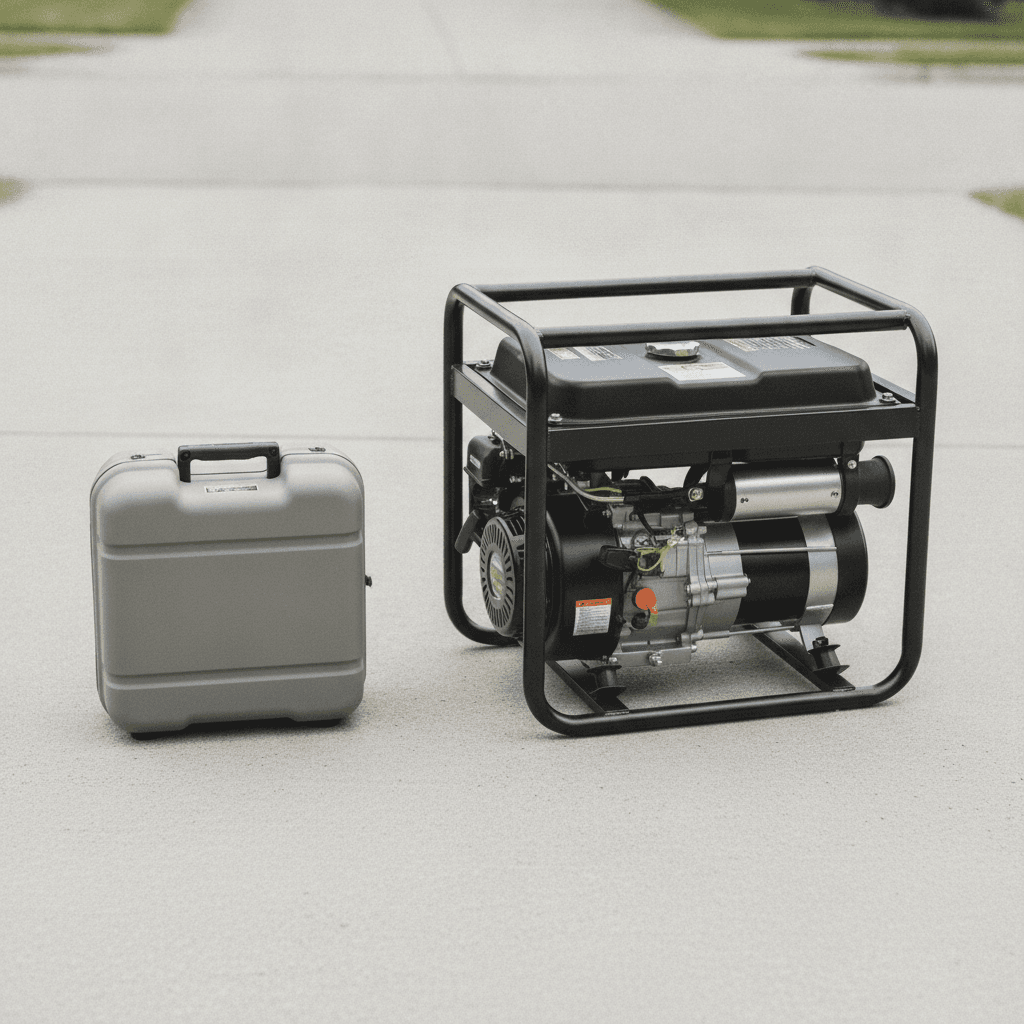
The standby machine is $3,000 to $6,000. Installed, the project runs $12,000 to $18,000. The real line items, plus the cheaper portable lane.

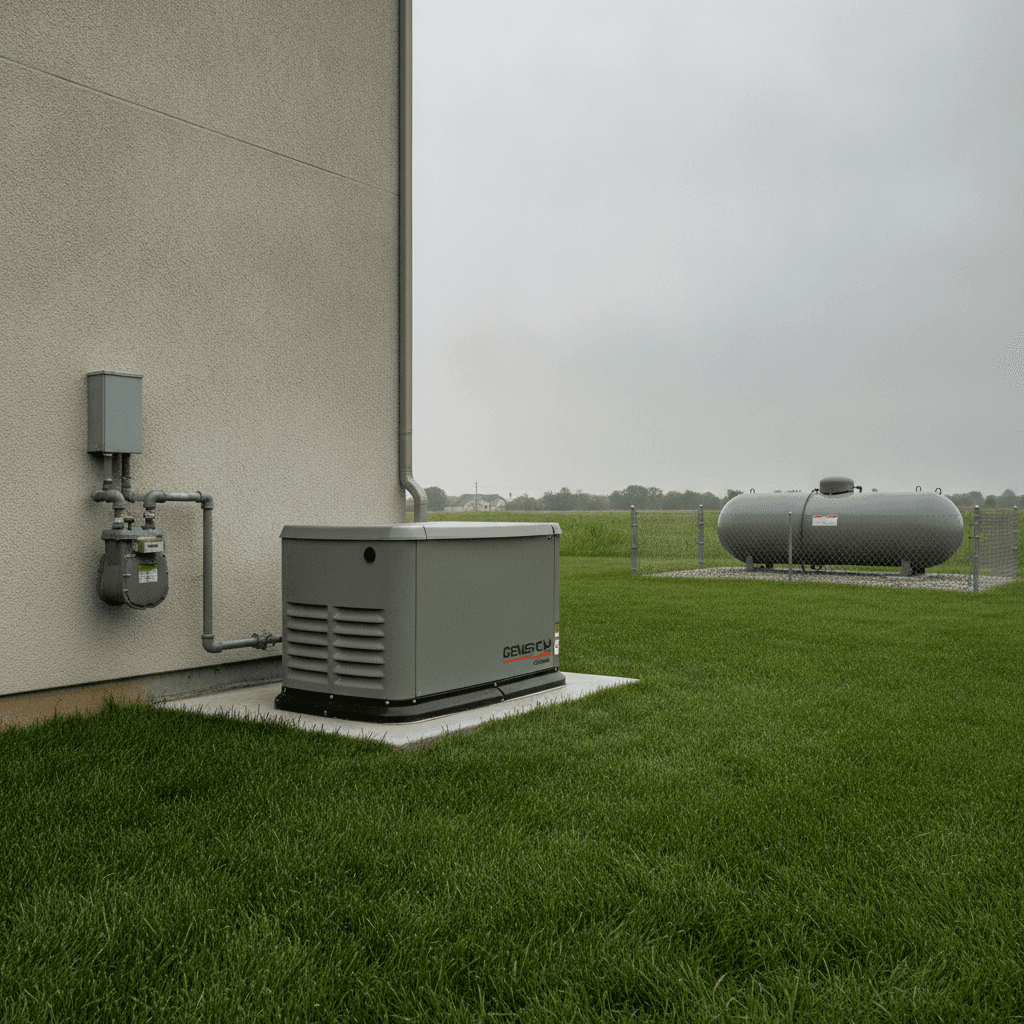
Quick answer: A whole-house standby generator is a $3,000 to $6,000 machine bolted into a $12,000 to $18,000 project. The install often costs as much as the generator once you add a concrete pad, gas line sizing, a possible meter upgrade, an automatic transfer switch, an electrician, a plumber, and permits. If your outages are a few short blackouts a year, a $700 to $2,500 portable plus a $400 to $850 interlock covers it for a fraction of that. Size the spend to your outage pattern, not the brochure.

Standby GeneratorBuying GuideBudgetInstalled CostGeneracWhole-House Generator
Never Run a Generator Indoors: CO Kills in Minutes
2026-07-04Installation

Never Run a Generator Indoors: CO Kills in Minutes

Never run a generator indoors, in a garage, on a porch, or near a window. CO is odorless and kills in minutes. The rules that keep you safe.

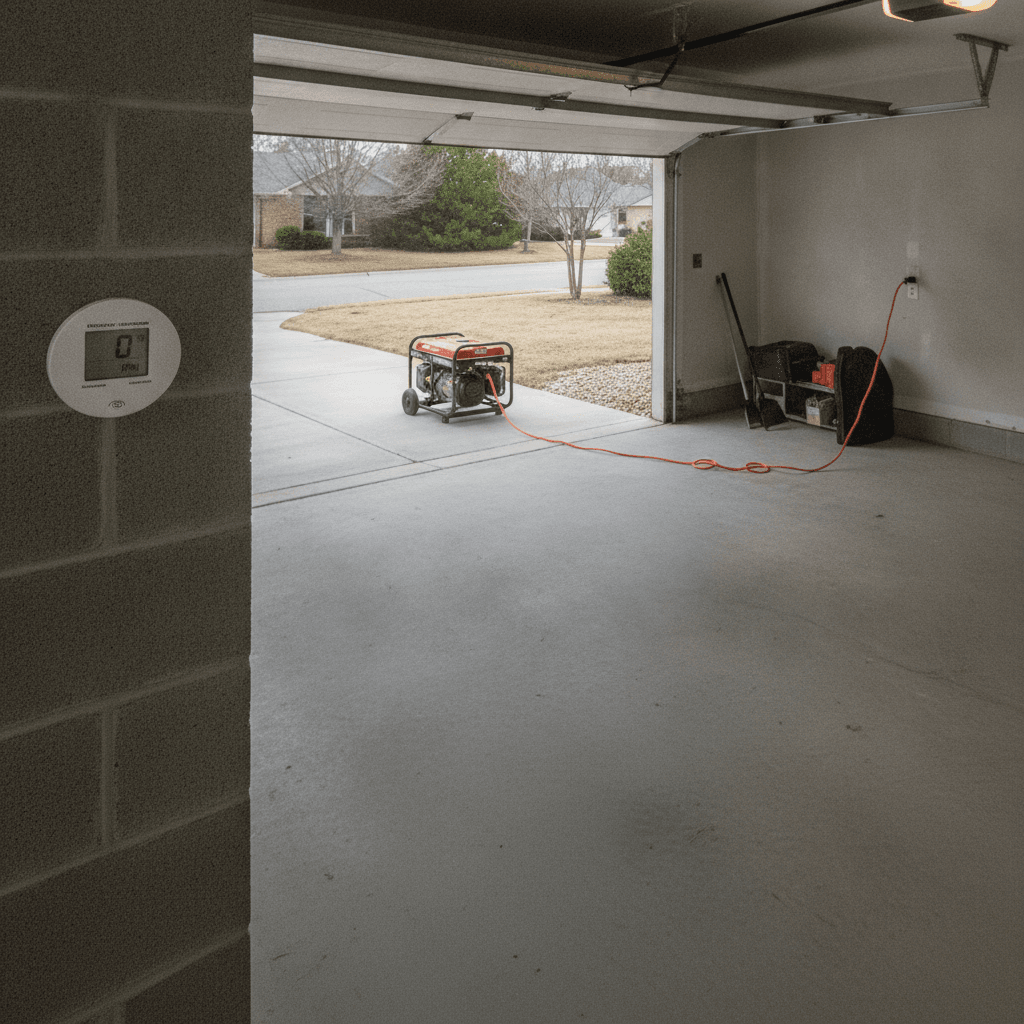
Quick answer: Never run a portable generator indoors. Not in the house, not in the garage with the door open, not in the basement, not on a porch, and not next to a window. The exhaust is carbon monoxide, a gas you cannot see or smell that can kill in minutes, and opening a door does not make it safe. Run it outside only, at least 20 feet from the house, with the exhaust pointed away, and keep battery-operated CO alarms on every level.

Generator SafetyCarbon MonoxidePortable GeneratorCPSCStorm PrepInstallation
Natural Gas vs Propane Generator: Which Fuel Fits
2026-07-04Setup Type

Natural Gas vs Propane Generator: Which Fuel Fits

Natural gas means unlimited runtime and no tank, but a small output derate. Propane works when the gas grid fails, if the tank is sized right.

Quick answer: Natural gas gives a standby generator effectively unlimited runtime with no tank to fill, but most air-cooled units lose roughly 5 to 12 percent of their rated output on natural gas versus propane (est.), and they stop if the gas grid goes down. Propane works when the gas infrastructure fails and stores for years, but a large standby at half load burns roughly 2 to 3 gallons an hour, so tank size decides how many days you get. If you have a gas line and your outages are grid-only, natural gas is the low-hassle default. If you want fuel you control, or you have no line, propane earns its tank. Dual-fuel portables give you both.

Natural Gas GeneratorPropane GeneratorFuel ComparisonStandby GeneratorDual FuelBuying Guide
Inverter vs Open-Frame Generator: Real Differences
2026-07-04Setup Type

Inverter vs Open-Frame Generator: Real Differences

Inverter means clean, quiet power for electronics. Open-frame means more watts per dollar and more noise. Which one actually fits your loads.

Quick answer: An inverter generator makes clean power (under 3 percent THD, safe for laptops and TVs), runs quieter (around 48 to 60 dBA at 23 feet est.), and weighs less, but costs more per watt. An open-frame generator gives you more watts per dollar and runs louder (roughly 64 to 72 dBA est.) with higher THD that is fine for motors and heaters but risky for sensitive electronics. Buy the inverter for electronics, quiet, and HOA noise limits. Buy open-frame for storm duty, a well pump, or a workshop. Dual-fuel versions exist in both types.

InverterOpen FramePortable GeneratorsComparisonTHDBuying Guide
Interlock Kit vs Transfer Switch: Costs and Rules
2026-07-04Installation

Interlock Kit vs Transfer Switch: Costs and Rules

Interlock kit ($400 to $850) vs manual transfer switch (up to $1,500). What each does, code and permits, and why it is all electrician work.

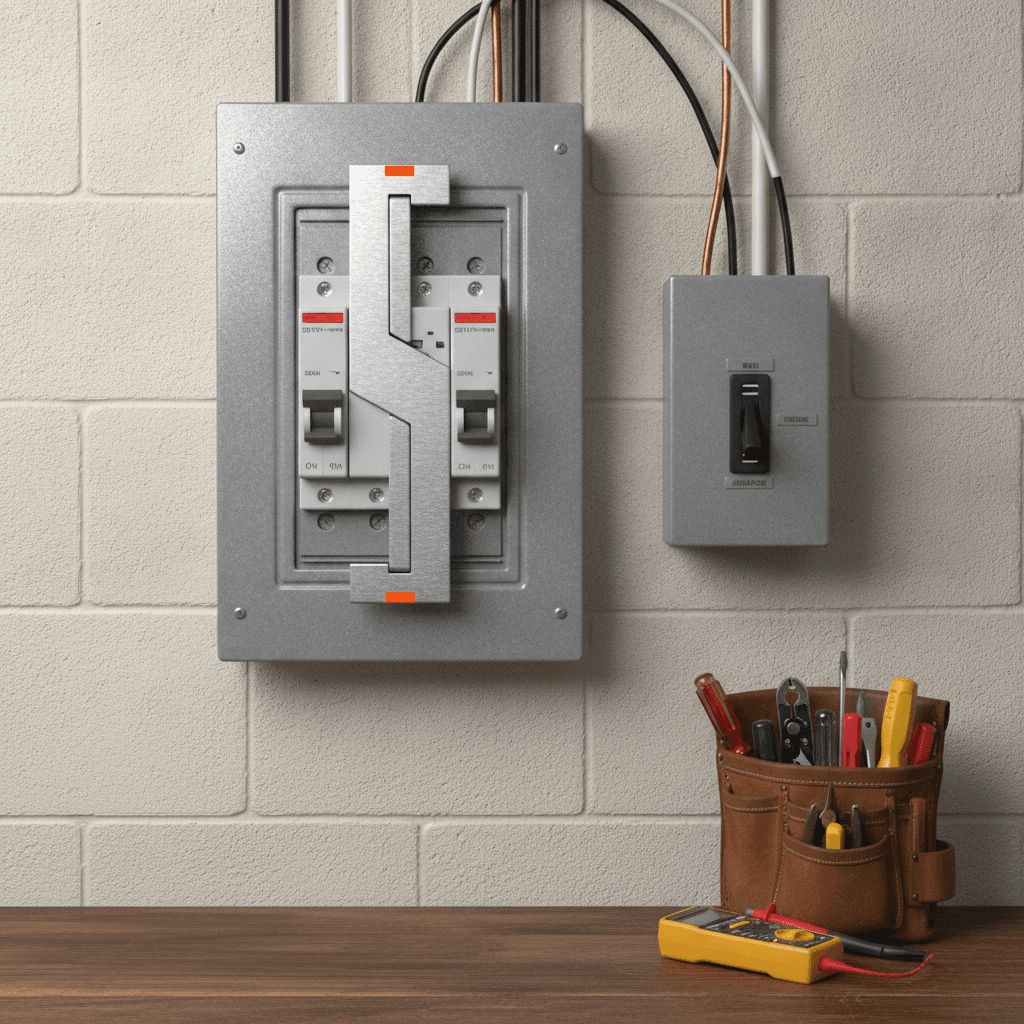
Quick answer: To power your house from a portable generator legally, you need an interlock kit or a transfer switch, wired in by a licensed electrician. An interlock kit runs about $400 to $850 installed and lets you feed the whole panel while you manage the load by hand. A manual transfer switch runs up to about $1,500 and powers a fixed set of circuits with less juggling. Both prevent backfeeding, which is illegal and can kill utility workers. The automatic transfer switch that swaps power for you belongs to the standby lane and runs $2,000 to $5,000 in electrical work.

Interlock KitTransfer SwitchPortable GeneratorInstallationCostBackfeeding
Hurricane Season Generator Prep: The Spring List
2026-07-04Installation

Hurricane Season Generator Prep: The Spring List

Buy and test your generator in spring, not the week a storm is named. Test runs, fuel storage, cords, and a carbon monoxide plan done early.

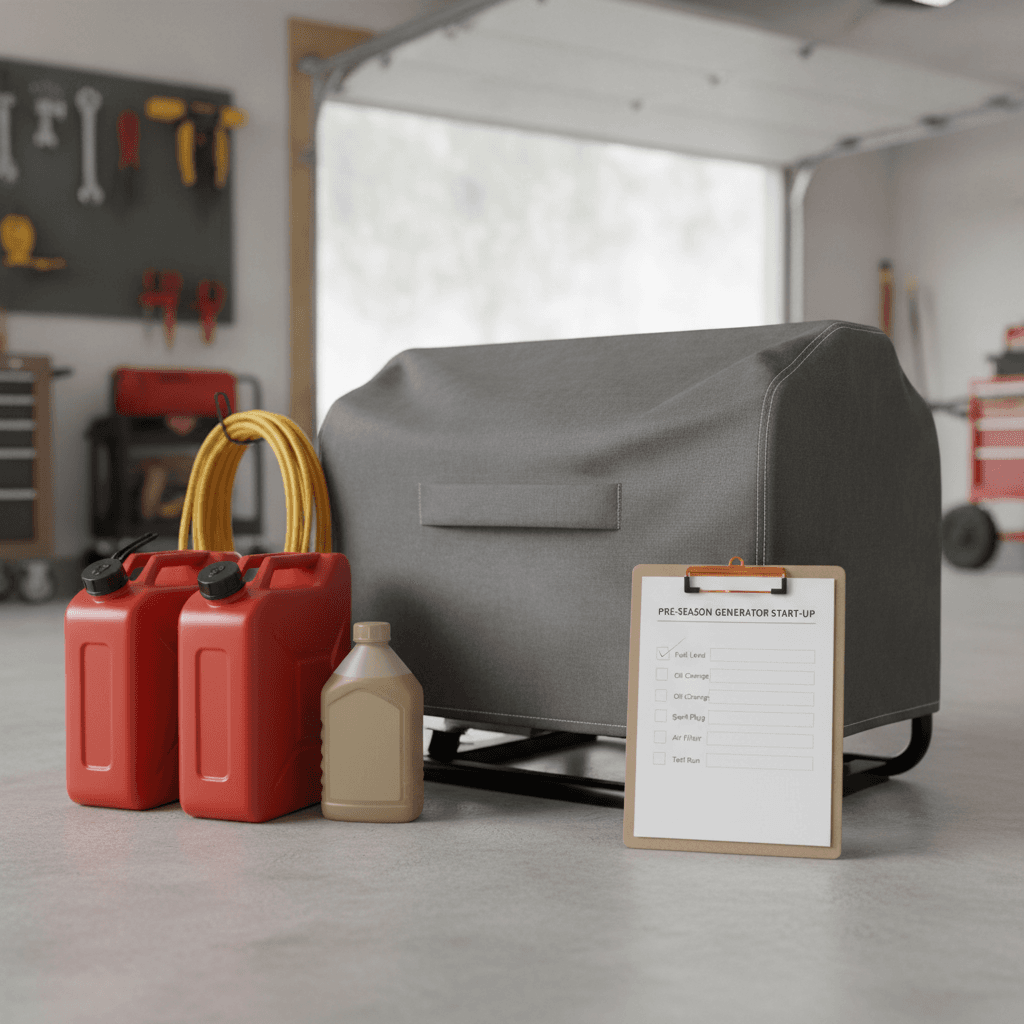
Quick answer: Buy and test your generator in spring, because in the week a storm is named the portables, cords, and fuel cans sell out and prices spike. The spring list is short: a monthly 20-minute test run under load, fuel stored with stabilizer (or propane, which keeps indefinitely), cords and the interlock checked, and a carbon monoxide plan with detectors and a 20-foot placement spot chosen in advance. When a storm is named you just fuel up, run a test, charge everything, and review the CO plan.

Hurricane PrepPortable GeneratorsSafetyFuel StorageMaintenanceStorm Season
Generator vs Home Battery: The Straight Answer
2026-07-04Setup Type

Generator vs Home Battery: The Straight Answer

Short outages favor a battery, silent and indoor. Multi-day outages favor a generator you can refuel. Real installed costs and when the answer is both.

Quick answer: The split is clean. For short outages measured in hours, a home battery wins: silent, indoor-safe, no fuel, and it switches over instantly. For outages measured in days, a generator wins, because you can refuel it and a battery runs down. A standby generator is $12,000 to $18,000 installed, a home battery is $10,000 to $30,000 installed, and a portable plus interlock is $1,500 to $3,500. For a lot of homes the real answer is both.

GeneratorsHome BatteryComparisonBuying GuideBackup PowerSolar
Generator Safety Guide: CO, Placement, Refueling
2026-07-04Installation

Generator Safety Guide: CO, Placement, Refueling

Portable generator safety per CPSC: carbon monoxide, the 20-foot rule, safe refueling, wet weather, overload, and backfeeding, served straight.

Quick answer: Run a portable generator outside only, at least 20 feet from the house, with the exhaust pointed away from doors, windows, and vents. Never run it inside a home, garage, basement, crawlspace, shed, or on a porch, even with the doors open, because the exhaust is carbon monoxide and it kills more than 80 people a year (CPSC). Put battery-operated CO alarms on every level of the house, refuel only when the engine is off and cool, and have a licensed electrician wire in an interlock or transfer switch so you never backfeed the grid.

Generator SafetyCarbon MonoxidePortable GeneratorCPSCInstallationBackfeeding
Generator Maintenance Cost: What Owners Actually Pay
2026-07-04Budget

Generator Maintenance Cost: What Owners Actually Pay

Standby service runs $200 to $400 a year plus oil and a battery every 2 to 3 years. Portable owners pay in stale fuel and no-starts.

Quick answer: A standby generator costs $200 to $400 a year for a service contract, plus an oil and filter change and a new starting battery every two to three years. A portable costs less in dollars and more in discipline: gasoline goes stale in one to three months without stabilizer, and gummed carburetors are the number one reason a generator will not start when the storm hits. Propane does not go stale, which is the quiet advantage of a dual-fuel portable. Budget the upkeep before you buy, because the year-three no-start is a pattern, not bad luck.

Generator MaintenanceStandby GeneratorPortable GeneratorOwnership CostFuel StorageBudget
Generator Buying Regrets: What Owners Wish They Knew
2026-07-04Final Decision

Generator Buying Regrets: What Owners Wish They Knew

The generator regrets owners repeat most, from the quote that doubled to wishful watts and self-test noise, each with the number and the fix.

Quick answer: Most generator regrets are not about the brand. They are about the quote that doubled from a $6,000 machine to a $16,000 install, watts that looked bigger on the box than in the driveway, and no legal way to connect a portable without a $400 to $850 interlock. Add stale fuel that kills a portable by year three, oversized standby units burning fuel on a weekly test, and maintenance contracts that turn out to be mandatory for the warranty. Every one of them is avoidable if you price and size the whole project before you buy.

Buying GuideStandby GeneratorsPortable GeneratorsSizingCostMistakes
Generac vs Kohler: The Standby Head-to-Head
2026-07-04Comparison

Generac vs Kohler: The Standby Head-to-Head

Generac vs Kohler compared for real buyers. Dealer network, warranty, self-test noise, and why the installed cost is the same for both.

Quick answer: Both Generac and Kohler build credible whole-house standby generators, and the installed cost is the same $12,000 to $18,000 for either. Generac's real advantage is the largest dealer and parts network in the country, which means faster service almost anywhere. Kohler counters with a quieter self-test, an all-aluminum enclosure, and equally strong warranty options. Pick Generac for network reach, pick Kohler if you have a strong local dealer and value the quieter, corrosion-resistant build.

GeneracKohlerStandby GeneratorsComparisonWarrantyBuying Guide
Best Portable Generators for Home Backup (2026)
2026-07-04Shortlist

Best Portable Generators for Home Backup (2026)

Quiet Honda inverters, Westinghouse value, Champion and DuroMax dual-fuel for storm duty, and the interlock every portable pick actually needs.

Quick answer: For quiet backup that is safe for electronics, a Honda EU2200i (1,800 running watts, around $1,200 est.) or a Westinghouse iGen4500DF inverter is the pick. For storm duty, a well pump, or half the house at once, a Champion or DuroMax dual-fuel open-frame gives you 7,500 to 10,500 running watts for roughly $800 to $1,100 est. Whatever you buy, a portable that powers your panel needs a $400 to $850 interlock installed, and a model with a carbon monoxide shutoff sensor is the safety tiebreaker.

Portable GeneratorsBuying GuideBackup PowerInverterDual FuelComparison
Best Home Standby Generators (2026): Real Costs
2026-07-04Shortlist

Best Home Standby Generators (2026): Real Costs

Compare the best home standby generators, Generac, Kohler, Briggs, Cummins and Champion, with the real installed cost of $12,000 to $18,000.

Quick answer: The best all-around home standby generator is a Generac Guardian, because nothing else matches its dealer and parts network. But the machine is the smaller half. Air-cooled whole-house units run $3,000 to $6,000 for the box and $12,000 to $18,000 installed, and that installed number barely changes between brands. Kohler, Briggs & Stratton, Cummins, and Champion are all credible, so the real tie-breakers are warranty length and which brand your local dealer actually services.

Standby GeneratorsBuying GuideGeneracKohlerComparisonCost