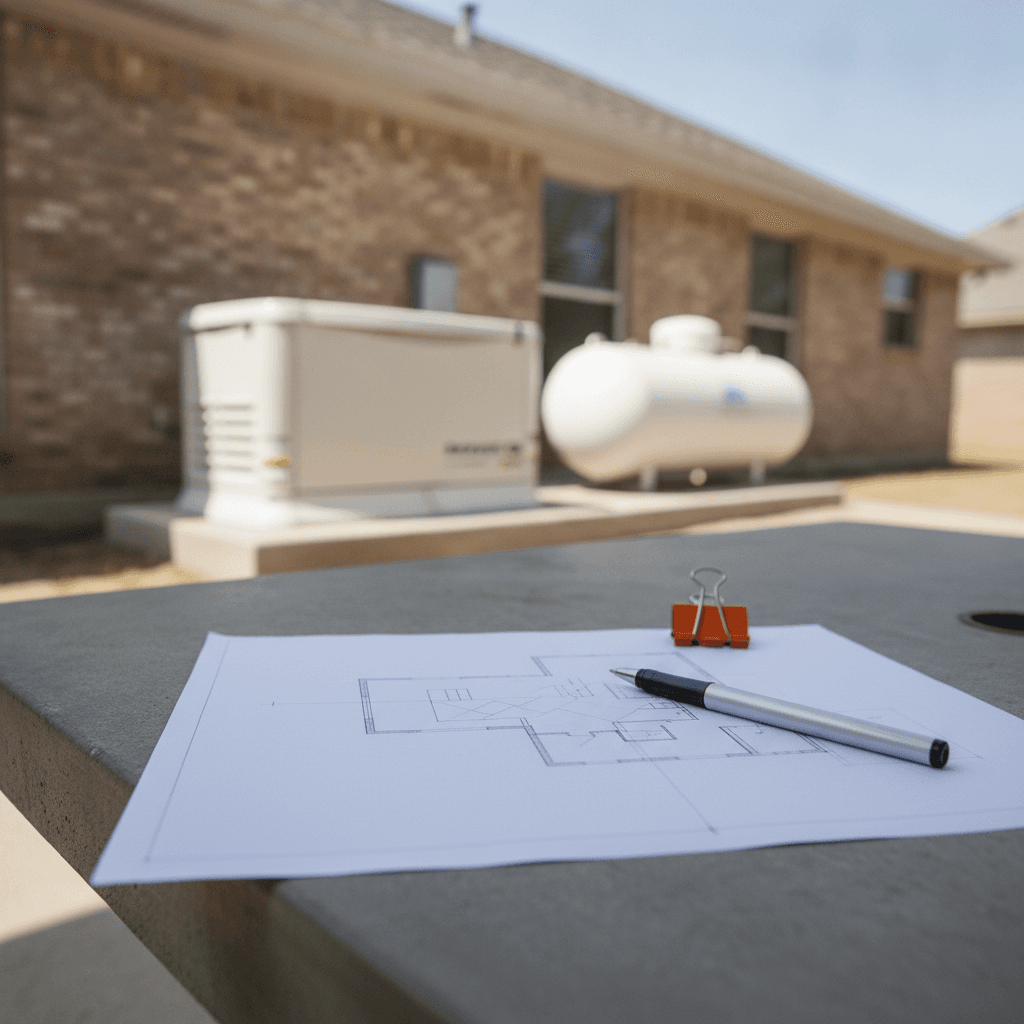
Generator Installation Cost in Texas: The Real Total (2026)
What a standby generator costs installed in Texas: Houston and Pearland permit fees, the state electrician license rule, and what Winter Storm Uri changed.
Budget
Quick answer: A whole-house standby generator installed in Texas typically runs $12,000 to $20,000 all in, at the higher end of the national range because more Texas homes need a propane tank instead of a natural gas tap. The permit itself is usually cheap, often $40 to $90 in a city like Houston, but installers commonly bill $400 to $1,400 to pull it, coordinate the inspection, and handle the paperwork. Texas has no local substitute for the state electrician license: TDLR requires a licensed electrical contractor for the transfer switch work everywhere in the state, no exceptions. Budget the whole project, not the machine sticker, before you take a dealer quote.
Best for
Texas homeowners pricing a standby generator project before they take a dealer quote or apply for permits.
Wrong fit
Buyers outside Texas, or buyers who already have a signed, itemized quote and just want a brand shortlist.
Tradeoff
Texas permit fees are small. The installer's paperwork and inspection-coordination fee is not, and it is easy to mistake one for the other when a quote arrives as a single line item.
Texas installs run at the higher end of the national range, not because the generator costs more, but because more Texas homes are on propane instead of piped natural gas, and because the state's summer heat and winter grid failures both push buyers toward bigger units. Here is what the project actually costs, what the permits actually require, and what changed after Winter Storm Uri.
We don't sell generators. We save you from buying the wrong one, and in Texas that starts with knowing the real number before a dealer quote arrives. For the national version of this math, see the real cost of a whole-house generator. If you have not yet decided between standby, portable, and battery, the generator buying guide walks the full decision in order.
Quick answer: what it costs in Texas
Component
Typical Texas range
Notes
Generator unit (10-26 kW)
$3,000-$12,000
Larger units for 2,500+ sq ft homes with AC
Installation labor
$2,000-$8,000
Electrician, plus a plumber if the fuel line changes
Automatic transfer switch
$600-$2,000
Installed by the licensed electrician, not optional
Concrete pad
$200-$500
Some cities require an engineer-stamped pad detail
Permits and inspection coordination
$400-$1,400
City permit fee is small; this line is mostly labor
Typical all-in total
$12,000-$20,000+
Higher end for large homes or a new propane tank
A mid-size Houston home (2,000-2,500 sq ft, a 4-ton AC) most commonly lands on a 22 kW unit for roughly $12,000 to $14,000 installed, based on 2026 Houston-market installer pricing. Smaller homes on 10-14 kW units can come in around $7,000 to $12,000. Statewide pricing that assumes a new propane setup, rather than an existing natural gas line, runs higher, commonly $13,000 to $20,000 or more.
The permit fee and the installer's fee are two different numbers
This is the line buyers most often misread on a quote. In Houston, the city's own electrical permit fee for a standby generator is small: roughly $10 to $12 per kW for units over 10 kW, plus a flat $33.56 administrative fee, which lands most residential jobs around $40 to $90 in raw city fees. In Pearland, the generator permit itself runs $280 to $360, and the job also needs a separate electrical permit and, if the fuel line changes, a plumbing permit, each pulled by a licensed, city-registered contractor.
What installers bill for "permits" on a quote, commonly $400 to $1,400, is mostly their labor to prepare the site plan, the one-line electrical diagram, and the survey copy the city wants, then schedule and stand for the inspection. That is legitimate work. It is just not the permit fee. Ask your installer to itemize the city fee separately from their coordination charge, and if the number looks padded, send the quote through our free quote second-opinion before you sign.
Texas requires a state-licensed electrician, with no local exception
Texas Department of Licensing and Regulation rules require anyone performing electrical work, including the transfer switch wiring a generator install always needs, to hold a state electrical license and work through a licensed electrical contractor. There is no grandfather clause and no city-level substitute: a municipal registration can sit on top of the state license, but it cannot replace it. Cities can charge their own permit and registration fees, but they cannot require a separate exam for a state-licensed electrician.
In practice this means a "generator guy" without a state license, however good his work looks, cannot legally pull the electrical permit or sign off the transfer switch. If a quote does not name a licensed electrical contractor of record, that is a red flag before it is a price question.
Why Texas often runs above the national number
The national real-cost range for a whole-house standby project is $12,000 to $18,000. Texas commonly sits at or above the top of that band for one structural reason: a large share of Texas homes, especially outside the older parts of major metros, do not have a natural gas line to the house. Running or sizing a propane tank and feed line adds cost that a home already on natural gas does not carry. Compare the fuel logistics honestly in natural gas vs propane generator before you assume your neighbor's quote applies to your house.
The automatic transfer switch itself is the same equipment nationwide, but Texas installers frequently upsize it alongside bigger AC loads, since Texas summers mean the compressor's starting watts are almost always in the sizing math. See the transfer switch cost guide for how that equipment is priced on its own.
What Winter Storm Uri actually changed
Winter Storm Uri, February 2021, is the reason Texas standby demand jumped and stayed up. The state's own accounting: about 69 percent of Texans lost power at some point between February 14 and 20, the average outage ran 42 hours, and the storm contributed to at least 210 deaths, with hypothermia, vehicle crashes, chronic-condition complications, and carbon monoxide poisoning among the causes. Some of those carbon monoxide deaths came from portable generators run too close to the house or indoors, during the exact kind of multi-day, whole-state outage a standby system is built for.
That is the honest case for standby in Texas: not the marketing pitch, the actual failure mode from the last time the grid went down statewide. It is also the case for getting portable generator placement right when standby is not yet in the budget. If a portable is the near-term plan, read never run a generator indoors before the next cold snap or hurricane, not during it, and check the seasonal hurricane season generator prep guide before storm season peaks.
Uri is not the only data point. For the full year-by-year outage record, including the years the grid held through record heat and cold with no statewide event at all, see how often the power actually goes out in Texas.
Frequently Asked Questions
How much does a whole-house generator cost installed in Texas?
Typically $12,000 to $20,000 or more all in, for the machine, transfer switch, pad, fuel line work, labor, and permits together. Mid-size Houston homes on natural gas often land at the lower end, around $12,000 to $14,000; homes needing a new propane setup run higher.
Are generator permit fees expensive in Texas?
The city fee itself is usually not the expensive part. Houston's own electrical permit fee for a standby generator is commonly $40 to $90. Pearland's generator permit runs $280 to $360 plus separate electrical and, if applicable, plumbing permits. What raises the number on a quote is the installer's fee for preparing paperwork and handling the inspection, not the city's charge.
Do I need a licensed electrician to install a generator transfer switch in Texas?
Yes, everywhere in the state. Texas Department of Licensing and Regulation rules require a state-licensed electrician working through a licensed electrical contractor for this work, with no city-level exception or substitute.
Why do Texas installs cost more than the national average?
Mainly fuel logistics. Homes without an existing natural gas line need a propane tank and feed line added to the project, which natural-gas-connected homes elsewhere do not pay for. Bigger AC loads in Texas homes can also push installers toward a larger transfer switch and generator size.
Did Winter Storm Uri change what Texans buy?
It is the reference event for Texas standby demand. The state recorded roughly 69 percent of Texans losing power at some point during the storm, an average 42-hour outage, and at least 210 deaths from causes including hypothermia and carbon monoxide poisoning. That multi-day, statewide failure pattern is the actual case for standby power in Texas, distinct from the shorter, more localized outages a portable and interlock can cover.
These guides are built from manufacturer documentation, public specifications, primary research where health claims matter, and repeated buyer questions that show up in real ownership and installation decisions.
Manufacturer responses can clarify pricing bands, warranty terms, support footprint, or common mistakes. They do not move a page up the shortlist on their own.