Generator Guide
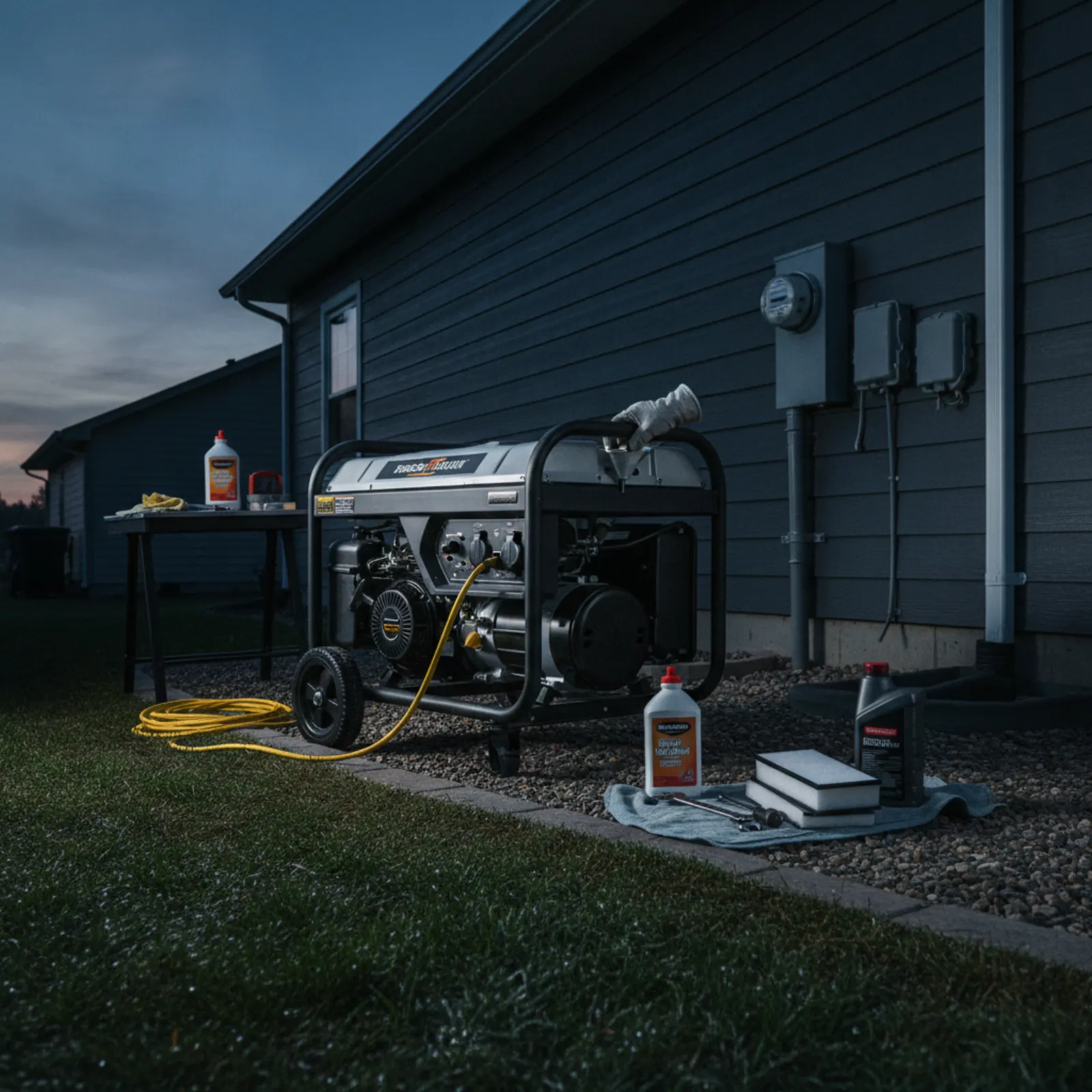
Generator After-Outage Checklist: Maintenance Before Storage
What to do after using a generator in an outage, including cool-down, refueling safety, oil checks, cords, CO alarms, fuel storage, and service notes.
Quick answer: After an outage, let the generator cool, inspect cords and transfer gear, check oil and runtime, handle fuel safely, document issues, and restock before the next storm.
Best for
Generator owners who used portable or standby backup and want to avoid next-outage surprises.
Wrong fit
People currently experiencing a carbon monoxide alarm, fire risk, or medical emergency. Leave and call emergency services.
Tradeoff
The outage is over, but maintenance now decides whether the generator works next time.
Methodology
These guides are built from manufacturer documentation, public specifications, primary research where health claims matter, and repeated buyer questions that show up in real ownership and installation decisions.
Manufacturer responses can clarify pricing bands, warranty terms, support footprint, or common mistakes. They do not move a page up the shortlist on their own.
Health and safety pages are written conservatively. When the safer answer is to slow down, get clearance, or skip the heat, that is the answer we give.
Next Step
What to do next
Use one of these three paths. They are here to move the decision forward, not add more noise.
Want the full buyer path in your inbox? We send the short version.
Related Guides
Hurricane Prep • Portable Generators
Hurricane Season Generator Prep: The Spring List
Buy and test your generator in spring, not the week a storm is named. Test runs, fuel storage, cords, and a carbon monoxide plan done early.
Buying Guide • Standby Generators
Generator Buying Guide 2026: Standby, Portable, Sizing and Cost
The full home generator buying decision in one page. Standby vs portable, sizing, fuel, transfer switch, installed cost, CO safety, and what to ask before you sign.
Portable Generators • Buying Guide
Best Portable Generators for Home Backup (2026)
Compare quiet Honda and Westinghouse inverters with Champion, Westinghouse, and DuroMax dual-fuel generators for output, warranty, fuel, and storm backup.
Transfer Switch • Interlock
Generator Transfer Switch Cost: Interlock, Manual or Automatic?
How to budget for generator transfer equipment: interlock kits, manual and automatic transfer switches, electrician labor, permits, and safety.